
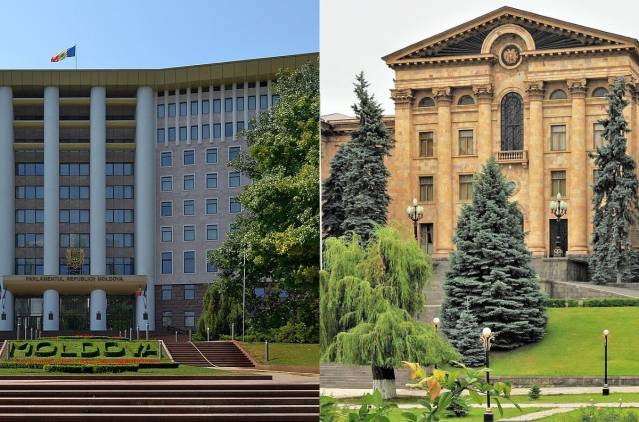
The original Armenian version of this article series - consisting of five pieces – was published in Hraparak daily in September - October 2025. Whether it was just a coincidence or our series triggered the move, almost immediately the pro-Russian expert and media circles in Armenia began to draw parallels between Armenian and Moldovan political landscapes and insist that EU interference provided victory to Moldovan ruling party in 2025 Parliamentary elections, further suggesting that the same scenario may be repeated in Armenia. Shortly afterwards the EU NGO-s, experts, etc. started to cultivate the opposite thesis as if Russia is going to interfere with Armenian Parliamentary elections of 2026, as supposedly they did in Moldova in 2025. The EU side advanced so far that even donated 15 million euros to Armenian government for fighting inter alia the hybrid attacks on the eve of elections.
It’s quite possible people both in Russia and EU realize that they are distorting the reality and they do it with purpose. But it’s equally possible the complete unawareness of the history and background of Armenia’s and Moldova’s relationships with Europe and Russia, the huge differences that define many of today’s realities lead them to their superficial thinking and parallels. Hopefully, the US Vice President’s visit to Armenia will make them stop and try to comprehend what are the similarities and differences between Armenia and Moldova. We are publishing our 3-piece series in English to give them some grounds for thought.
KNOWN AND UNKNOWN MOLDOVA, PARALLELS WITH ARMENIA
The name Moldova is known to everyone in Armenia, just as the names Армянска or Armenesca are known to everyone in Moldova. The difference is that while in Armenia the knowledge about Moldova is mainly inherited from the Soviet times, in Moldova the knowledge about Armenians comes from place names like Armenian Street, Armenian Courtyard, Armenian Cemetery, Armenian Church, etc which are part of the Old Town of Chisinau, and were called that way centuries before the Soviet Union was founded, or even the Russians appeared in the Eastern part of the Principality of Moldova (1359-1859) known as Bessarabia.
By the way, the Russians appeared in Moldova, or rather, in Bessarabia, due to the 1812 Treaty of Bucharest, which was negotiated and concluded in the Bucharest mansion of the Armenian merchant Manuk Bey Mirzayan. Manuk Bey died at the age of 48, but even during such a short life, managed to become the most influential merchant and richest man of the entire Balkans. He had such a level of personal contacts, influence, and connections that the Sublime Porte of the Ottoman Empire granted him the position of Dragoman in relations with Europe. In parallel, Manuk Bey was awarded the title of Действительный Статский Советник (Actual State Counselor) by the Russian court, which was equivalent to the rank of Major General in the military service.
Manuk Bey and other prominent Armenians who played a role in Moldovan history were my unexpected, most precious, and greatest discovery in Moldova, about whom, surely, I'll write. But first, about Moldova.
TROLLEYBUS NO 30 AND INTEGRATION TO BALKANS
People arrive in Moldova primarily through the International Airport of Chisinau in country's capital. Further to reach from airport to Stephan cel Mare (Stephen the Great) Avenue in Chisinau city center, or vice versa, you take a trolleybus. It's the route of trolleybus number 30. Trolleybuses are the main public transport in Chisinau. Buses are rare, trams, metro, minibuses, trains do not operate at all.
The center of Chisinau - a city of about half a million people - is the Old Town, where all government buildings, city attractions, cultural institutions, universities, museums, concert halls, temples, churches, city parks, cafes, restaurants, etc. are located. In a sense, Chisinau is the Old City that was built mainly in 19th century. The most remarkable and beautiful buildings of Old City were designed by Alexander Bernardazzi, an architect of Italian descent who worked in 1850-es to 1870-es. Bernardazzi's buildings formed the architectural linaments of Chisinau, which are cherished, loved and preserved to this day.
Almost the entire center of the Old Town of Chisinau is stretched by already familiar Stephan cel Mare Avenue, which, by the way, is the only two-way street in the Old Town, with a length of more than 3 km. Several other streets have one-way traffic, while others have no public transport at all.
As a result, even from just an external acquaintance with Chisinau - the Old Town area, the streets, the parks, the pedestrian and trolleybus rhythm of movement - you realize that Chisinau is almost a resort city. If to add here a couple of facts; 50-60 thousand tourists arrive in Moldova annually (for comparison, 2.3-2.4 million arrive in Armenia), the total volume of Moldova's exports is around 3.5 billion dollars (Armenia's is 13 billion), the largest sector of Moldova's economy and exports make the agricultural and processed products (Armenia's main exports are precious stones, metals, electrical and electronic equipment, machinery), it can be generalized that Chisinau is the resort capital of an almost agrarian country. This is the first key feature I realized in Moldova.
WITH NO GEOPOLITICAL CONSEQUENCES
The second key point arising from this, is that Moldova's integration into the EU factually is integration into neighboring Balkan countries, mainly Romania. You may never guess it from the outside, but inside, with a cursory glance, you quickly realize it. Moreover, Moldova's integration into the EU is an almost self flow move that does not cause any noticeable geopolitical shifts, consequences, or trajectory. Romania is an EU member state, Ukraine is moving towards the EU, and Moldova, located between them, is automatically advancing towards the common EU territory.
Still Armenia's membership in the EU is a shift of geopolitical scale with trajectory affecting the entire Near East, a move that turns the wheel of history back not for 100 years to the Treaty of Sèvres, but perhaps for 1,000 years to the Battle of Manazkert. From the Battle of Manazkert in 1071, began the retreat of European civilization and presence (represented by the Byzantine Empire) from Armenian Highlands and Armenia Major. Of course, the Armenian Kingdom of Cilicia maintained Armenia's contacts with Western Europe for another three centuries, thanks to its friendship with the Crusader Orders, to Cilician port of Ayas (as Marco Polo described Ayas was "the gateway to the East,") but ultimately in the end of 14th century, the Cilician Kingdom also fell. So the return of European civilization and presence to the Armenian Highlands after 1,000 years is a huge shift.
After being in Moldova, I am confident that by 2030, the issue of Armenia's EU membership will be resolved on an equal footing with the current candidate states. If Moldova needs a timeline of three years to negotiate the 35 sections of the EU Acquis, then looking at Armenia's indicators, technically even less negotiation time could be sufficient for Armenia. That's another matter, that the EU integration for Armenia can't be as easy as for Moldova. Generally, since the fall of Berlin Wall hardly the EU membership process was so easy for any country as it is for Moldova. Why?
For a simple reason: Moldovans are ethnic Romanians, their language is Romanian (originated from Vulgar Latin), most of the territory of the medieval Principality of Moldova (1359-1862), including the capital Iași are part of Romania. Between the First and Second World Wars of the 20th century, the territory of the current Republic of Moldova was part of the Kingdom of Romania. The Soviet Union re-annexed the territory after World War II and established the Soviet Socialist Republic of Moldova. After the collapse of the Soviet Union, in 1990-es new discussions and sentiments emerged about reunifying with Romania, but the idea was never pursued seriously.
However, whether reunified with Romania or not, the existence of one Romanian state within the EU has greatly facilitated the integration of a second Romanian state into the EU. Actually the last major test on the way of EU integration, that in case of unfavorable outcome could harm the process a bit, was the Parliamentary election of Moldova held on September 28, 2025.
THERE WOULDN’T BE TURN BACK ANYWAY
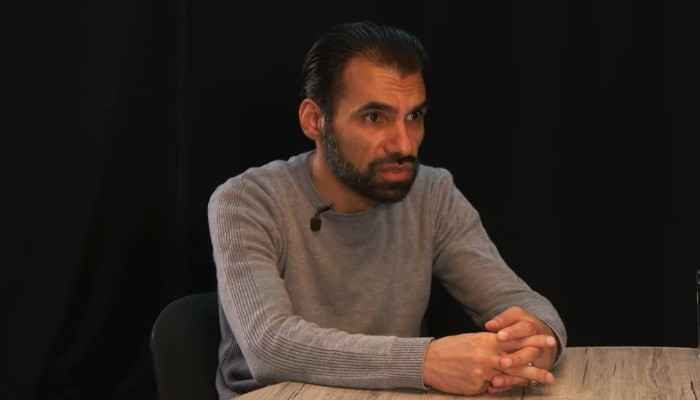
"All the polls and public sentiment show that PAS will receive the majority of votes. Maya Sandu is the highest-rating politician in the country, but her party's rating is lower," explained political and security expert Andrei Curararu during our conversation in July. He mentioned that President Sandu's and PAS term of office coincided with force majeure situations: COVID, the Russian-Ukrainian war, Moscow's energy blackmail. "When, after so many crises and trials, Sandu and PAS still have the highest ratings in the country, it's good, said Mr Curararu. The bad thing is that a second, more or less reputable, pro-European force was never formed to participate in the elections. They invited famous pro-European figures to the PAS list, included there also figures from the arts, show business, and sports. In other words, they simply left the voter with the only choice: "if the EU, then PAS."
The Spokesperson and Public Communications Adviser to President Maya Sandu, Mr. Igor Zaharov agreed that supporters of the pro-European line had no alternative, only PAS was on the ballot. But Mr. Zaharov didn't see PAS fault or responsibility in that. "Wouldn't PAS be happy if a second pro-European force participated in the elections and entered Parliament? That way, nothing would threaten the victory of the pro-European line, but unfortunately, a second pro-European force never took shape. Some figures of the pro-European line were invited to the PAS electoral list, simply because all the polls showed that their parties couldn't receive more than 2% of the vote. They were invited to the PAS list so that they could at least individually enter parliament and ensure greater consolidation of the pro-European camp."
In the parliamentary elections on September 28, PAS received 50% of the vote, thereby securing the process of European integration. However, even if PAS had not won, a coalition government had been formed, even if Igor Dodon had formed the new cabinet, still there wouldn't be turn back. "I remember during the 2016 presidential campaign, Dodon all repeated that he will tear up the Association Agreement, will sever ties with Brussels,- recalled Mr. Igor Zaharov. Still, when he came to power, never took any such steps, because after the elections one always has to take the reality into account." And the irreversible reality in Moldova is that about 1.5 million of the country's 2.5 million population are Romanian citizens, and most of the territory of medieval Moldovan Principality, including its capital Iasi, are in today Romania. How it happened and what it means, we'll discuss next.