
See Part I here
MOLDOVANS ARE ETHNIC ROMANIANS, IASI IS IN ROMANIA
Why is the EU integration process easier for Moldova than it has ever been for any other country in Eastern Europe? If to say the integration is incomparably easier for Moldova because Romania is already part of the EU, the logical connection between these realities will be as "visible" to the Armenian reader as the connection between the "facts" of the famous English joke: "It's Monday, it's raining, Jake is driving down the street in an Aston Martin, how old is Mary's grandmother standing on the street..." In other words, no connection will be visible.
If to say there is no such thing as "Moldovan" ethnicity, that Moldovans are ethnic Romanians, that their language is Romanian, and that Romania has been a member of the EU for almost two decades (since 01.01.2007), some logical connections may appear. Still then, the cause and effect between the ease of EU integration for Moldova and Romania's EU membership, I am afraid, will remind the famous anecdote of Logic, that from the fact of not having an aquarium at home "logically deduces" the sexual orientation of the person.
Therefore, in order to understand Moldova's current European integration process, it’s necessary to get acquainted, at least in general terms, with the history of the Romanians and the feudal statehoods they created in the Middle Ages: the principalities of Wallachia, Moldova, and Transylvania. Furthermore, it should be noted that the majority of the territories occupied by the historical Principality of Moldova, that existed in the 14th-19th centuries, including the Principality's capital Iasi, that served in that capacity from 1564 to 1862, are located in present-day Romania.
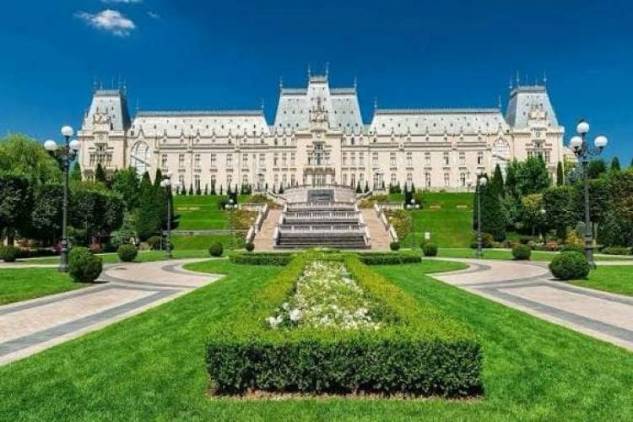
Iași was also the capital of the Kingdom of Romania for several years during World War I (later the status was returned to Bucharest, the capital of Wallachia). However, Iasi has always been considered the cultural capital of Romania, and in 2018 also the title of Historical Capital of Romania was awarded to Iasi. Judging by photos it's a really beautiful and impressive city. And one of the earliest monuments of Iasi, which proves the age of the city, is the Armenian Church dedicated to the Virgin Mary, built in 1395.
FROM DACIA TO WALLACHIA, MOLDOVA, TRANSYLVANIA
In short, everyone knows that during the times of Ancient Greece and Rome there was a territory called Thrace. The most famous place ever located in Thrace, surely was Constantinople (the city is currently named Istanbul and is part of Turkey). Thrace spread along the shores of the Black and Mediterranean Seas, on the Balkan Peninsula, and was inhabited by peoples of Indo-European origin, who were collectively called the Thracian peoples. One of these peoples, the Dacians, whom Strabo considered to be of more noble characteristics, approximately in the times of the rule of Tigranes the Great in Armenia - around the 80-es of the 1st century BC - established a state in Thrace called Dacia.
In the 80-es of the 1st century AD, the Roman Empire initiated military campaigns against Thrace, also clashing with the Dacians and in 106 AD Emperor Trajan conquered Dacia. That conquest set the beginning of the Romanization of those territories. Right those Dacians, who mixed with the Romans, were influenced by Roman civilization and subjected to Romanization, inherited from Romans their spoken language – the Vulgar Latin, which later became the basis of the Romanian language, and the Romanized Dacians likewise became known as ancestors of the Romanians. The name Romanian, which is also the self-name of Romanians, originates from the name of Rome.
The Roman Empire had not collapsed yet when the territory of Dacia came under attacks of medieval savage, nomadic tribes: Huns, Alans, Avars. After the fall of the Avar Khanate, the First Bulgarian Empire was established in the 9th century, the population of which consisted mainly of the Bulgarians, the Romanians called Wallachians or Vlachs, and the Slavs. Several centuries later, at the end of the 12th century, in 1185, the Second Bulgarian Empire was founded, where the Bulgarians and Romanians already held close statuses, the state itself often was called Bulgarian-Wallachian Empire.
A century later, in 1310, the first Romanian national statehood, the Principality of Wallachia, was established. In 1359, the second Romanian statehood, the Principality of Moldova, was founded. Later, the Principality of Transylvania emerged, but it was often under Hungarian domination. All Romanian principalities were destined to fight against the Far Eastern steppe barbarians who reached Europe in the Middle Ages: the Seljuks, Mongols, Turks, etc. Ultimately, however, the status of a vassal state of the Ottoman Empire was established for the principalities of Wallachia and Moldova in the mid-1400s, and in the 16th-17th centuries the same status was recognized for the principality of Transylvania. Vassal dependence mainly consisted of paying taxes and duties, there were almost no other significant dependencies. Also, the princes ruling Wallachia and Moldova had to be approved by the Sublime Porte.
This vassal, semi-independent status was maintained by the authorities of Moldova and Wallachia until the 19th century. In the first half of the 19th century the national liberation movements swept the Ottoman Empire; the Romanians also rebelled. Their uprising was suppressed, the Romanians rebelled again, finally in 1858 the federal union of Wallachia and Moldavia was established. In 1877 that union declared its independence that was recognized by the Treaty of San Stefano in 1878, then by the Treaty of Berlin - concluded at 1878 Congress of Berlin. In 1881 the Romanian state was named the Kingdom of Romania. Further, during the 20th century multiple regimes changed in Romania: monarchical, republican, fascist, communist, the country's borders were changed, uprisings took place, governments were overthrown, but what is essential - the Romanian national state which united medieval Moldova and Wallachia, exists and maintains its independence to this day.
IMAGINE THE RUSSIANS HADN'T OBSTRUCTED THE SEVRES TREATY
Naturally, here a question arises for the reader: if the territory of the Principality of Moldova that existed in the Middle Ages together with its capital Iasi, are located in present-day Romania, then in what territory the present-day Republic of Moldova is established?
The answer is as follows: today's Republic of Moldova occupies the smaller, eastern part of the Principality of Moldova that existed in the Middle Ages, which in 1812, under the Treaty of Bucharest (negotiated and signed in the mansion of Armenian Manuk Bey), passed under the control of the Russian Empire and ever since has been known as Bessarabia. Between the First and Second World Wars the territory of the present-day Moldova was part of the Kingdom of Romania. The Soviet Union re-annexed the territory after World War II, still with smaller borders, as part of Bessarabia was integrated into Ukraine. I was told in Moldova that after the collapse of the Soviet Union, in the 1990s, there were certain discussions and moods about rejoining Romania, but the idea was never brought to life.
In any case, whether united with Romania or not, it is obvious that the existence of one Romanian state within the European Union has greatly facilitated the integration of the second Romanian state into the EU, starting with the removal of the language barrier. To make it more vivid for the Armenian reader, nonetheless the history does not recognize "ifs," let's imagine for a moment that the Russia`s vicious interference with Armenian history and the outcomes of the Versailles Conference hadn't occurred, that the Russians hadn't found Kemal Ataturk from nowhere, financed and armed him and used against Armenia and Greece. Then what could obstruct the Treaty of Sevres from being enacted in regard to Armenia, Greece, and Constantinople with the same success as it was done in the rest of the Near East, from Mediterranean Sea to Persian Gulf?
Yet if the Treaty of Sevres had been implemented, if there was a civilized Armenian state in Western Armenia instead of the current uncivilized mess, and that state was part of the EU for a decade or two, then could the present Republic of Armenia's integration with the EU face any difficulties or hindrance? Certainly not, because then the country's integration with the EU would primarily mean integration with the rest of the motherland. In Moldova exactly this is the case and the peculiarity of EU integration. Surely the Russian authorities carry out destructive activities and propaganda in Moldova as much as they can, promoting narratives like the Moldovans are not Romanians, the Moldovan language is not Romanian, etc. but that does not change the course of things much.
Moldova has a population of around 2.5 million, of which around one and a half million already possess Romanian citizenship and passports. An airplane ticket from Chisinau to Bucharest costs $20. The bus ride from Chisinau to Iasi takes 2-3 hours. Moldovan students, as a rule, study for one or two semesters at Romanian universities, and individuals go to Romania even for food and household purchases. In other words, Moldova's integration with the EU through the neighboring Balkan countries is already an irreversible reality and exercise. How the integration is progressing in particular areas - economy, education, culture, security, etc., what results are achieved and what prospects lie ahead - will be discussed next.